

When people need a product or service today, their first instinct is often to search on Google. Whether they’re looking for a restaurant, a dentist, a law firm, or a digital marketing agency, businesses that appear on the first page are far more likely to attract clicks, inquiries, and customers.
The challenge is that simply having a website isn’t enough. Every day, thousands of businesses compete for the same search terms, making it harder to stand out without a clear SEO strategy.
This is where organic Search Engine Optimization (SEO) services make a difference.
Unlike paid advertising, which stops generating traffic when your budget runs out, organic SEO helps your website earn visibility naturally in search results. It focuses on improving your website, content, and overall online presence so potential customers can find your business when they’re actively searching for what you offer.
In this guide, you’ll learn what organic SEO services include, how search engines work, the different types of SEO, how long it takes to see results, and how to choose the right SEO agency for your business.
What Do We Mean by Organic Search Engine Optimization Services?
Organic Search Engine Optimization (SEO) services are the strategies used to improve your website’s visibility in unpaid search results on Google and other search engines. Instead of paying for every click through advertising, SEO helps your website rank naturally by making it more relevant, trustworthy, and valuable to users.
For businesses, this means attracting people who are already searching for products or services like yours. These visitors often have high purchase intent, making organic traffic one of the most valuable sources of qualified leads.
A complete SEO strategy typically includes:
- Keyword research to understand what your audience is searching for.
- On page optimization to improve website pages and content.
- Technical SEO to enhance website speed, structure, and performance.
- Content creation that answers users’ questions and targets relevant keywords.
- Link building to strengthen your website’s authority.
- Local SEO to improve visibility in location-based searches and Google Maps.
The goal of organic SEO isn’t simply to rank higher—it’s to help your business attract the right visitors, provide a better user experience, and generate sustainable growth over time.
How Do Search Engines Work?
To understand why SEO is important, it helps to know how search engines decide which websites appear first.
Although Google’s algorithm considers hundreds of ranking factors, the process can be simplified into three main stages:
1. Crawling
Search engines use automated programs called crawlers or bots to discover new and updated pages across the web. They move from one page to another by following links and collecting information about your website.
If your pages can’t be crawled properly, they have little chance of appearing in search results.
2. Indexing
Once a page is discovered, Google analyzes its content and stores it in its index—a massive database of webpages. During this stage, Google evaluates what your page is about, how useful it is, and whether it’s suitable to appear for relevant searches.
Pages that aren’t indexed won’t appear in Google Search.
3. Ranking
When someone performs a search, Google scans its index and ranks pages based on relevance, quality, authority, and user experience. The goal is to provide the most helpful and trustworthy results for every search query.
This is where SEO has the greatest impact. By optimizing your website’s content, technical performance, and authority, you increase your chances of ranking higher for the keywords your potential customers are searching for.
Rather than trying to “trick” search engines, modern SEO focuses on creating a better experience for users. The more valuable, relevant, and accessible your website is, the more likely search engines are to recommend it.
Effective SEO is about helping both search engines and your customers understand why your business deserves to be found.
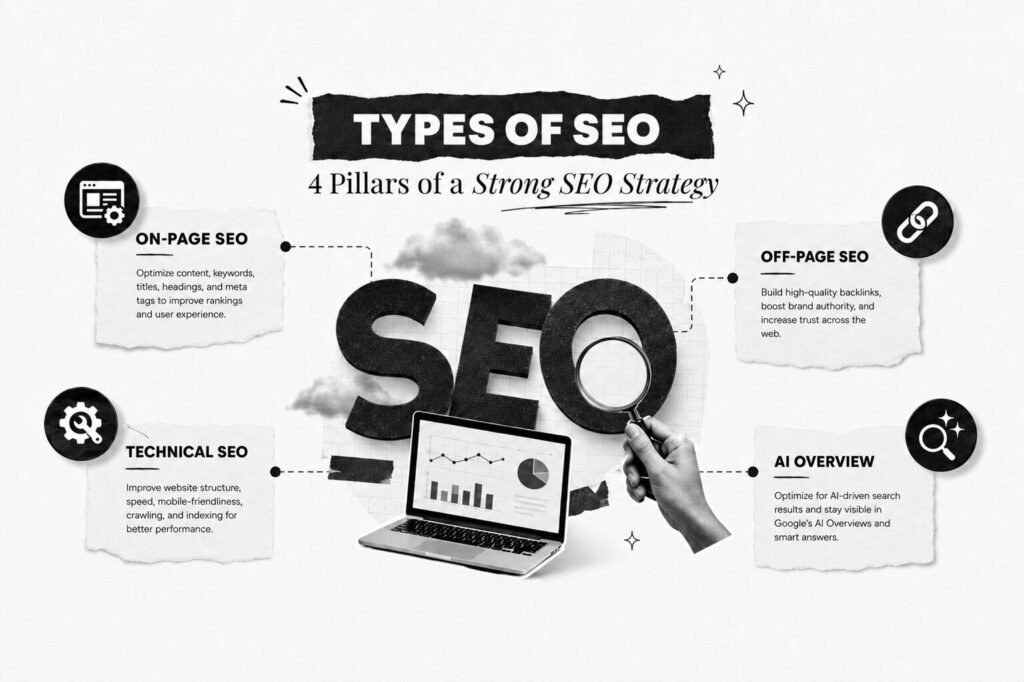
Types of search engine optimization
SEO is made up of several specialized areas that work together to improve your website’s visibility and performance. While each type has a different purpose, the best results come from combining them into a comprehensive search engine optimization strategy rather than focusing on just one.
On-Page SEO
On-page SEO focuses on optimizing the content and structure of individual web pages to help search engines understand what they’re about. It also improves the user experience, making it easier for visitors to find the information they’re looking for.
Key elements of on-page SEO include:
- Optimizing page titles and meta descriptions.
- Using relevant keywords naturally throughout the content.
- Creating valuable, user-focused content.
- Improving heading structure and internal linking.
- Optimizing images and multimedia.
Strong on-page SEO helps search engines match your pages with relevant searches while encouraging visitors to stay on your website longer.
Technical SEO
Technical SEO ensures your website performs well behind the scenes so search engines can crawl, index, and understand your content efficiently.
A technically optimized website typically:
- Loads quickly across all devices.
- Provides a mobile-friendly experience.
- Uses a secure HTTPS connection.
- Has a clear site structure and navigation.
- Fixes crawl errors and broken links.
Even the best content may struggle to rank if your website has technical issues, making this one of the most important foundations of any search engine optimization strategy.
Off-Page SEO
Off-page SEO focuses on increasing your website’s authority and reputation across the internet. Search engines view high-quality backlinks and brand mentions as signals that your website is trustworthy and valuable.
Common off-page SEO activities include:
- Earning backlinks from reputable websites.
- Digital PR and online publications.
- Guest blogging.
- Building brand mentions and online authority.
The goal isn’t simply to gain more links—it’s to earn relevant, high-quality references that strengthen your website’s credibility.
Local SEO
For businesses serving specific cities or regions, Local search engine optimization helps attract nearby customers who are actively searching for local products or services.
This is especially valuable for businesses in Egypt, including restaurants, clinics, retail stores, gyms, and professional service providers.
A Local SEO strategy typically includes:
- Optimizing your Google Business Profile.
- Managing customer reviews.
- Targeting location-specific keywords.
- Improving visibility in Google Maps.
- Maintaining consistent business information across online directories.
When someone searches for services “near me” or within a specific city, Local SEO increases the chances of your business appearing in those high-intent searches.
How Long Does SEO Take to Work?
SEO is a long-term investment, not an overnight solution. Unlike paid advertising, where results begin as soon as campaigns go live, search engine optimization takes time to build authority, improve rankings, and generate consistent organic traffic.
Most businesses begin seeing noticeable improvements within three to six months, while more competitive industries may require six to twelve months or longer to achieve significant results.
Several factors influence how quickly SEO works, including:
- The competitiveness of your industry.
- The current condition of your website.
- The quality of your content.
- Your website’s authority and backlink profile.
- The consistency of your SEO efforts.
While search engine optimization requires patience, its biggest advantage is sustainability. As your website gains authority and rankings improve, organic traffic continues to grow without paying for every visitor.
SEO vs. Paid Ads: Which Is Better?
SEO and paid advertising both help businesses increase their online visibility, but they achieve different objectives.
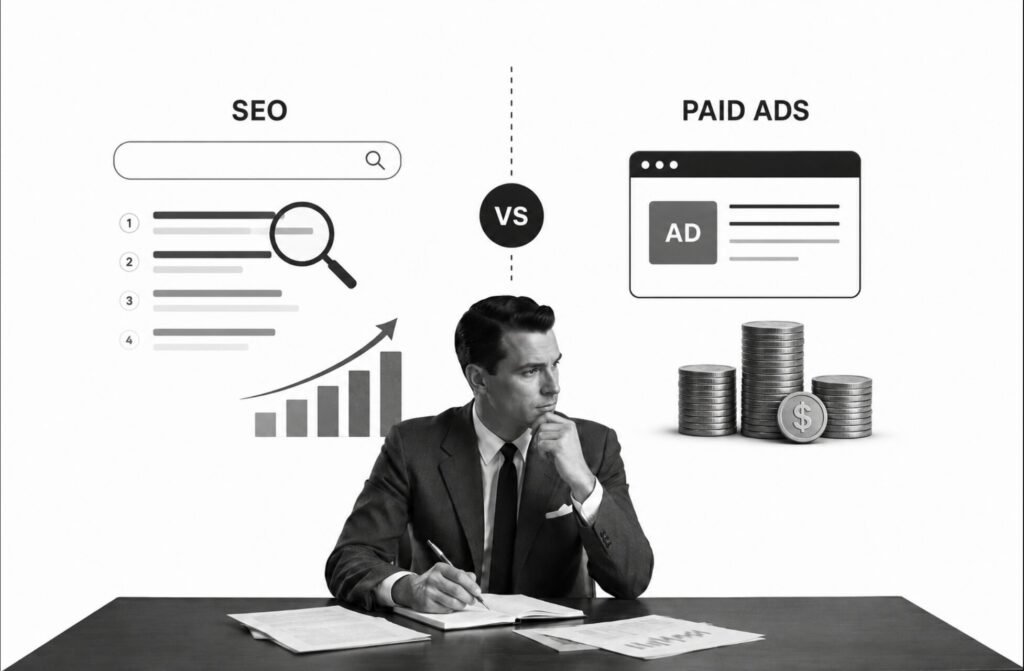
search engine optimization:
focuses on earning long-term visibility in organic search results. Although it takes time to produce results, it builds lasting authority, attracts qualified traffic, and continues generating leads long after content is published.
on the other hand, deliver immediate visibility by placing your business at the top of search results or social media feeds. They’re ideal for launching new products, promoting limited-time offers, or generating leads quickly, but traffic stops once your advertising budget ends.
Rather than choosing one over the other, many successful businesses use both. Paid advertising delivers short-term results while search engine optimization builds a sustainable foundation for long-term growth.
The right balance depends on your business goals, budget, and timeline, but combining both strategies often produces the strongest overall marketing performance.
How to Choose the Best SEO Agency for Your Business
Choosing an SEO agency is about more than finding a company that promises first-page rankings. The right agency should understand your business goals, develop a tailored strategy, and focus on delivering measurable growth rather than vanity metrics.
Here are a few factors to consider before making your decision:
Look for a Clear SEO Strategy
Every business has different objectives, target audiences, and competitors. A reliable SEO agency should explain how they plan to improve your rankings, increase organic traffic, and generate qualified leads instead of offering a one-size-fits-all solution.
Prioritize Experience Over Promises
No agency can guarantee the #1 position on Google. Search rankings depend on many factors and are constantly evolving. Instead, choose an agency that focuses on sustainable SEO practices, transparent reporting, and long-term results.
Make Sure SEO Supports Your Business Goals
Higher rankings are valuable only if they lead to meaningful business outcomes. A good search engine optimization strategy should help you attract the right audience, improve conversions, and increase revenue not simply drive more website traffic.
Ask About Reporting and Communication
SEO is an ongoing process that requires continuous improvement. Your agency should provide regular reports that track important metrics such as keyword rankings, organic traffic, conversions, and completed optimizations, while keeping you informed about progress and future opportunities.
Why Choose Novel Creative House for SEO?
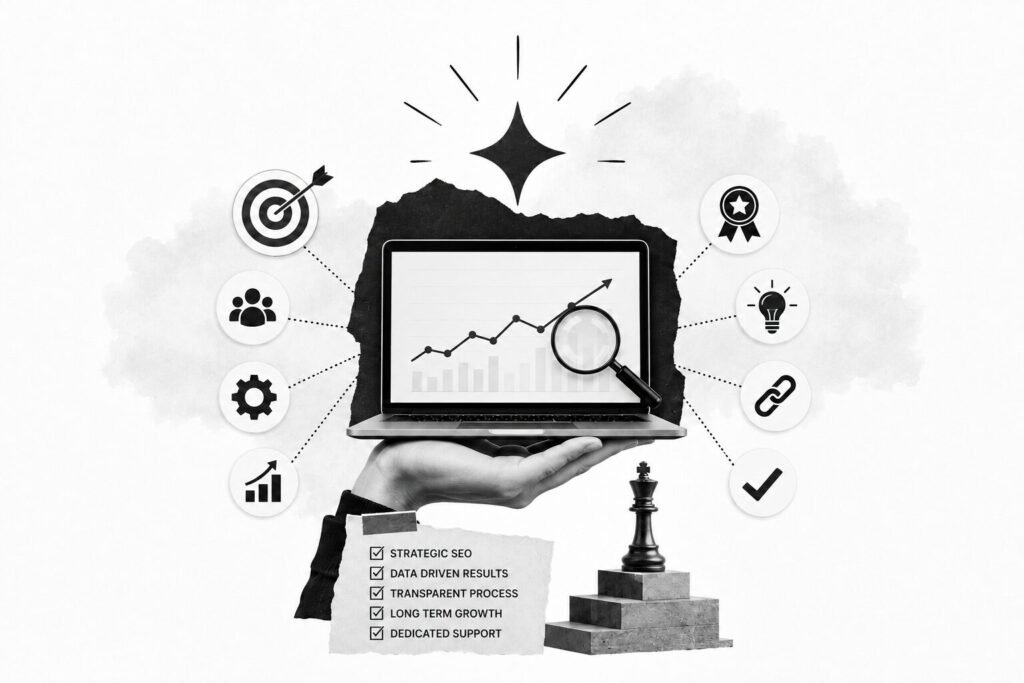
At Novel Creative House, we don’t chase rankings we focus on business growth. Our search engine optimization strategies combine technical optimization, keyword research, content creation, and performance tracking to help businesses increase their visibility, attract qualified traffic, and generate measurable results.
Conclusion
As a full-service digital marketing agency, we integrate search engine optimization with website development, content marketing, social media, and performance marketing to create a strategy that supports long term growth. Instead of offering generic SEO packages, we build customized solutions tailored to your business goals, industry, and target audience.
FAQS
What is organic search engine optimization?
Organic Search Engine Optimization (SEO) is the process of improving your website to rank higher in unpaid search results. It helps attract qualified visitors naturally through better content, technical optimization, and website authority.
Is PPC better than SEO?
PPC delivers immediate traffic through paid ads, while SEO builds long-term organic visibility and sustainable growth. The best strategy often combines both, using PPC for short-term results and SEO for lasting success.
What are the 4 types of search engine optimization?
The four main types of search engine optimization are On Page SEO, Off-Page SEO, Technical SEO, and Local SEO. Together, they improve your website’s relevance, authority, user experience, and visibility in search results.
What is an example of organic SEO?
Publishing an optimized blog article that ranks on Google for keywords like “best digital marketing agency in Egypt” without paying for ads is a common example of organic SEO. The traffic comes naturally from search engines.
Is SEO dead or evolving in 2026?
search engine optimization is evolving, not dying. In 2026, successful search engine optimization focuses on high-quality content, user experience, technical performance, and demonstrating expertise, while AI helps improve optimization rather than replace it.


